Just wondering if anyone else is having a problem putting a ALGO MOC Market order on for YINN. (Buy signal friday night) on the Totality SAXO Platform?
I am getting - “Order type “Market” not supported for this instrument”
I had the same issue, however it works today, my guess is that it may have had something to do with a public holiday in the US… anyway what ever it was it is fixed now and working Saxo/Totality
I had the same issue. I tried again today, but kept on getting a message not sufficient cash which is not the case. I had to drop the quantity by about 30% before the order was accepted. Did anyone else had a similar experience?
I’ve had that issue where I have had to reduce the number on my order when I didn’t have much more cash than wat the order was worth. I think with market orders when the market is closed they require you to have a buffer amount in your account in case the instrument price increases drastically during the day
I have been trying to use the Core Totality account today to place orders without luck. I have a had several problems including being unable to place a market order on Close for YINN.
Billy Macris has been able to place the order on my behalf until the issues are sorted out. Prior to last friday I had not had problems placing MoC orders for LABU or other trades last week
I had the insufficient cash message as well, and tried to reduce the order considerably and still the message of insufficient cash, so in the end put the order in as a limit on close order with a bit of gap, so unless it jumps during the day, hopefully I will get filled.
Yesterday, I encountered an interesting scenario with my SPA3 Income portfolio, which consists of five positions. On the Action Date (today), I needed to execute the following three trades:
Sell LABU
Buy SOXL (this would be the 4th position)
Buy UCTT (this would be the 5th position).
What made it ‘interesting’ was that:
The quantity for the SOXL MOC market order would depend on the LABU proceeds; and then
The quantity for the UCTT MOC market order needed to be reduced by around 10% for the order to be placed successfully.
I managed this by placing the LABU order last night before the market opened. I then woke up early this morning, before the market closed at 8:00 AM AEDT, to manually place market orders for SOXL and UCTT. This meant risking not getting the close price for both trades.
To maximise the advantage of using MOC market orders, I am considering maintaining a cash buffer that is not included in my portfolio’s money management. For instance, if my portfolio is $50K, I would aim to have $55K in the cash account.
Another option would be to place MOC limit orders for SOXL and UCTT, but there’s a risk of not getting filled.
I wanted to share this situation on the forum, as I suspect other SPA3 Income members may have faced similar challenges with today’s Action Date. I would be happy to hear how other (newbie) SPA3 Income members approach these scenarios.
Yes, it’s an issue, I sold LABU and did not attempt to trade the buys (not an early riser!)
I will buy AGQ tonight which is my 5th of 5 positions but I still have the other issue you referred to regarding the buffer and not having extra cash available to ensure the trade gets executed
So I’m thinking of either creating a permanent cash buffer (which results in idle cash - so not attractive) or running some sort of overdraft which would probably have to be enough to cover 1 position with a buffer
Would be interested to know how Gary handles this in the public portfolios
The way to handle this scenario for the last position in a portfolio w/o needing a cash buffer is to close LABU in the last hour of trade (ensure you have a contingency for potential problems such as internet access etc) using a Market order (for highly liquid ETFs) or Limit order for the not so liquid ETFs.
I always use Limit orders during market hours.
Once LABU is closed, then place a MoC order for SOXL. And UCTT in John’s case.
This works well in summer AEDT time, when the US market closes at 08h00. During winter AEDT, it closes at 06h00.
“Once LABU is closed, then place a MoC order for SOXL. And UCTT in John’s case.”
Hi Gary, so during market hours, when looking to place two orders that (combined) will use the remaining cash balance, will the platform allow two MOC market orders to be placed? or do they need to be two MOC limit orders?
Firstly, do you mean a LOC (Limit on Close) order when you say “MOC limit order”?
If so, you may not get filled at all with a LOC, or any type of Limit order for that matter.
In my experience Saxo will allow 2 x MOC orders to be placed out of and during trading hours. Have done this many times. The proviso is that there is sufficient cash in the account to fill both orders at the time of placing the orders.
If the stock / ETF price rises for any MOC order such that the last position placed becomes too big to be filled, Saxo will not fill the order.
This can be overcome in any of 3 ways:
Have a Cash Buffer > the starting capital injected into Portfolio Manager
Use a CFD for the last position, if one is avail for the stock / ETF (you will pay interest on the full position)
Place the MOC order during market hours close to the Market close time so you can adjust the Qty according to the price rise in the stock / ETF.
Great forum discussion, which has shared lots of trading options that SPA3 Income portfolio owners can use according to their situation and preference .
Gary, If you don’t rise early and don’t want to use a cash buffer or CFD, with the ETF income portfolio,given I understand there will be much more action, would there be anything wrong if you miss a buy which is simultaneous with a sell (so cash not available on MOC) just waiting until the next ATR BO comes along?
The issue of simultaneous sells and and then buys for the last position of a portfolio has been around for a long time of course. For me, it has been about 10 years since I started trading SPA Investor.
For my Australian portfolio, I simply trade during trading hours near the end of the day’s trading, and not actually try to do actual MOC trades. However for the US, I have had no interest in trying to do that during US trading hours and setting a wake-up alarm for a large chunk of the year. To overcome the problem all year, my trading plan for many years has been to sell the last position on the day after the sell signal as an MOC trade, as normal. Then the following day my trading plan rule is to buy the best ranked signal of that day’s signals and the previous day’s signals,.as an MOC buy. I always check the most recent rankings when doing this ie I don’t just take the previous day’s rankings for the previous day’s signals. So, in the last few days when I was unable to buy SOXL because funds weren’t available, I bought the best ranked signal of SOXL and AGQ the following day – AGC was clearly the better ranked.
I have often wondered what the portfolio impact would be of applying this “two-day” rule for every buy decision. Perhaps it’s something that SWS might like to investigate. It’s hard to see it causing too many problems with performance and it would certainly increase Exposure a small notch.
I saw the other alternatives to this trading plan rule as unattractive. Funding a whole extra position’s worth of money on the sideline for each portfolio to be able to infrequently fund simultaneous MOC sells and buys on the last position of the portfolio would mean a lot of money getting little or no interest. Funding via a margin arrangement of some sort was similarly undesirable. BTW, if either of these processes are used they should be included in the portfolio stats - any money on the sideline should be included in the portfolio and hence its performance stats and also the costs from any margin arrangement should be included.
I have never understood exactly how the public portfolios achieve simultaneous sells and buys of the last portoflio position. Could you please discuss Gary as possibly I’m missing something.
Thanks Don, that’s really helpful feedback
. As you say it is a long standing issue. I have followed a procedure similar to you with a different approach to AUS - (trading live) from US with MOC, also for about 10 years
I have dealt with the cash problem with MOC by using CFD’s but have recently abandoned that with the new ETF income portfolio as it is messy and I’m not confident CFD’s will be available on all trades.
So your approach seems logical and I would be interested in Gary’s response, hence my earlier query as to whether an approach such as you have adopted is likely to cause any issues
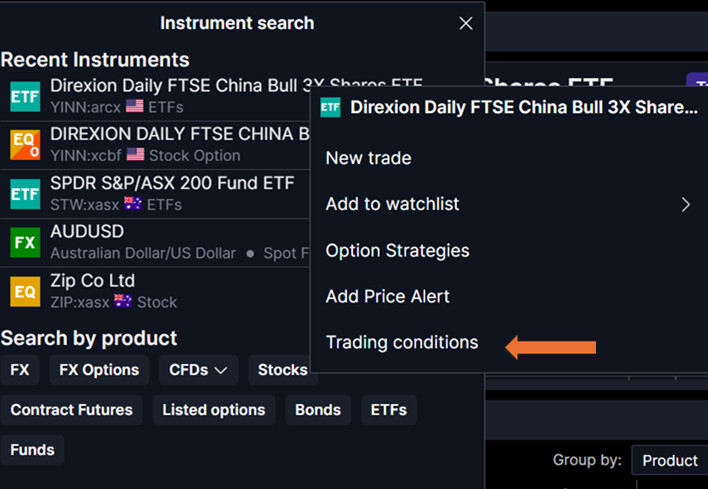
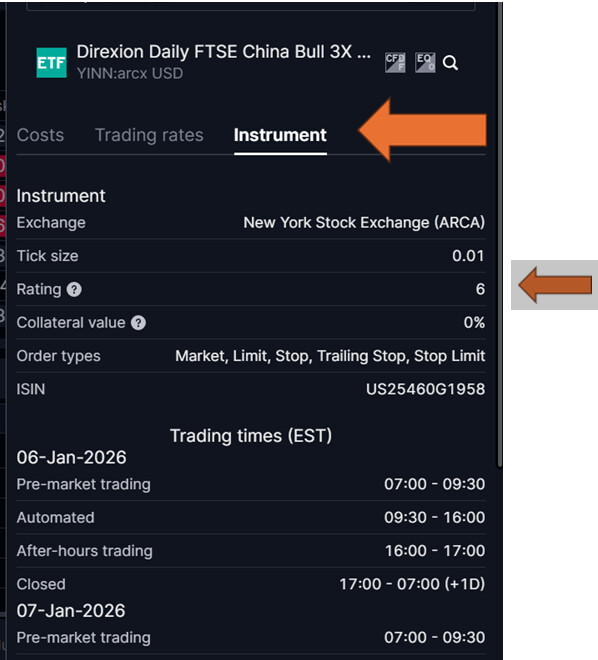
 .
. .
.